The Anatomy of a Timeline: Whistleblower Facts vs. Armchair ResearchI don't edit AI quotes, and I don't gaslight myself. Here is the hard line between what I know for a fact, and the theories I am putting on the board.Today's newsletter is a simple message about transparency. After yesterday's dispatch, it is important that the public record reflects the absolute, unshakeable line between my working historical theories and my firsthand whistleblower facts. Here is the corrected ledger. In yesterday's dispatch, I allowed the AI to provide its analytical opinion on the 1976 April 14th heist and the guards. It used strong structural words like "Forensic" and "Statistical Improbability." I didn't edit those words because it wouldn't be accurate. To present a "revised AI quote" defeats the purpose of showing you the objective, machine-generated analysis of my data. I rotate through dozens of AI threads to challenge my evidence. I explicitly ask the system to research what I provide and not just agree. Trust me, it debates me. It will push back with the "official" published theories until I remind it that I am a whistleblower, and my evidence hasn't been approved by the gatekeepers yet. After I sent yesterday's newsletter, one of my threads flagged the strong legal vocabulary the AI had used. It made me question myself, and I honestly couldn't sleep last night, wondering if I shouldn't have sent it. But I refuse to gaslight myself, and I must follow my gut on this journey. I trust that you, my readers, can filter the data and understand how AI analysis works. However, I realized I need to draw a distinct line between my first-hand reality and my broader research. The Whistleblower Facts vs. The ResearchI know that some of the peripheral research I present can be wrong. But here is the bedrock truth I stand behind without a shadow of a doubt: Frederick R. Koch executed the March 18, 1990 art heist at the Isabella Stewart Gardner Museum. He was involved in the October 1991 Bourlet & Sons fire in London. He is the man who arrived at my mother's flea market booth in Okeechobee, Florida, in 1991 and 1992. Nov 2000: The Charles Darwin notebook theft, backed by direct email confirmation verifying the name right to a Koch Member. Anthony Amore signed the Change.org petition with the Heywood signature. Harvard University stands to inherit the entire museum estate as a direct consequence of the heist and Anthony Amore’s breach of Isabella's will.
Those are the unshakeable facts. The rest of the information I share is research—me operating as an armchair detective to map his wider footprint. I don't want to confuse my mother's first-hand whistleblower story with these broader theories, but tracing his path makes the crossover unavoidable. The April 14th "Maybe"While my mother was the one living in Okeechobee when this story began—and though I lived there off and on throughout my adulthood, right up until I moved to Michigan—I actually grew up in Palm Beach County. I recalled the infamous local burglaries of my youth. Recently, I looked up unsolved Palm Beach heists and the 1976 Palm Beach Towers robbery surfaced. I might have moved on, but the date—April 14th—stared right back at me. I put it on my timeline next to the April 14, 1975 MFA heist, and the alignment was jarring. The AI got excited about the connections, and my last newsletter may have presented that alignment as absolute proof. Today, I want to clarify: I am placing a MAYBE? next to it. But it is a "maybe" that absolutely belongs on the board for public scrutiny. If Frederick executed both April 14th heists, it proves a premeditated fascination that set the stage for the Gardner heist. The Billionaire Mindset & Rick AbathI also want to follow up on Rick Abath. Could he have been involved? Of course. At this point, everyone in Boston's underworld seems to have some level of involvement. Most of us look at heists from a street-level perspective. For typical criminals, the easiest method is compromising a low-level insider. But a billionaire doesn't operate from that angle. A billionaire can afford to buy the whole board.
The Mafia Way: Bribe the night guard. The Wealthy Mastermind Way: You don't bribe the night guard. You buy the board, control the roster, and ensure the desk is defenseless before you ever walk in the door.
Think about it like this:
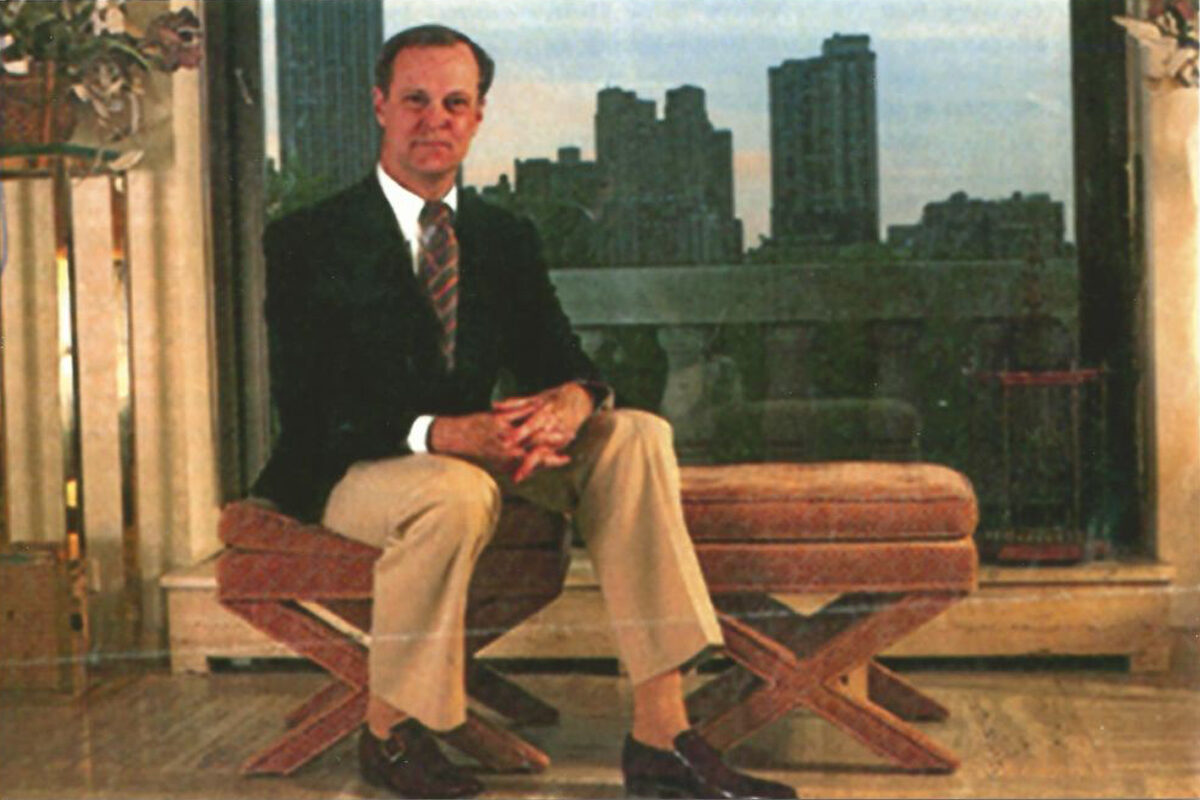
When Frederick sold this artwork to my mother, he operated from his perspective. He thought she could walk into Sotheby's, present an undiscovered Van Gogh, and they would celebrate and sell it just like they would for him. In reality, while Sotheby’s signed a contract for the Jane Peterson due to the Kodak paper, they laughed my mother out the door on the Van Gogh and immediately called the Koch brothers.
By the 1980s, Frederick had secured nearly half a billion dollars in his corporate buyout. That money changed his ego and his power dynamic. Up until that point, he was likely the lead man in a partnership. But with that cash, he became the boss. He was no longer splitting the loot; he was paying the crew. The Heist Timeline (The Working Ledger) October 17, 1969: Oratory of San Lorenzo, Palermo, Sicily – Nativity with Saint Francis and Saint Lawrence (MAYBE?) April 1972: Woolworth House, Maine – 51 oil and watercolor paintings valued at over $250,000 stolen from the summer estate. (MAYBE?) Sept 4, 1972 (Labor Day): Montreal Museum of Fine Arts – The Rembrandt. (MAYBE?) May 27, 1974 (Memorial Day): Woolworth House Estate – The Wyeths. (MAYBE?) April 14, 1975 (Isabella's Birthday): Museum of Fine Arts, Boston – The Rembrandt. (MAYBE?) April 14, 1976 (Isabella's Birthday): Palm Beach Towers – Thieves dressed as security guards bound the real guards, stealing $4 million in cash/jewelry. (MAYBE?) Dec 24, 1978 (Christmas Eve): de Young Museum, San Francisco – The Rembrandt. (MAYBE?) Dec 24, 1980 (Christmas Eve): National Museum of Fine Arts Heist (Argentina) – (MAYBE?)
NO MORE HEISTS - Heists pause as Frederick battles his brothers in court, securing his half-billion-dollar buyout. March 17/18, 1990 (St. Patrick's Day): The Isabella Stewart Gardner Museum Heist (Boston). Sept 24, 1991: Gardner suspect Robert Donati is found murdered. Oct 7, 1991 (13 Days Later): A massive “suspicious” fire at the James Bourlet & Sons warehouse in London. Nov 1991: “Ed Koch” (Frederick R. Koch) appears at an Okeechobee flea market. He sells the “damaged” checklist of artwork to my mother, Mary, for mere dollars.
The 15-Year High and the Okeechobee CrashI know that tracking the sheer scale of this research can sometimes feel like a lot for my readers, but it is precisely because of that persistence that I believe I have finally pieced together the true, human picture of why this man broke and arrived in my mother's life.
I want you to imagine the psychological whiplash of the above timeline. If Frederick executed the two April 14th heists in the mid-70s, it proves he spent at least 15 years obsessing over the Gardner Museum as his ultimate grand prize. He spent the entire decade of the 1980s acquiring his half-billion-dollar war chest and building the dark infrastructure to finally pull it off. In March 1990, he executes the extraction. He achieves the ultimate high of winning his 15-year game. But almost immediately, the walls start caving in. His mother dies. His relationship with his underworld network begins to fracture. Robert Donati is murdered. A couple of weeks later, the massive Bourlet & Sons art fire happens in London. Imagine the emotional weight of that exact moment. The high of a 15-year obsession crashing directly into utter chaos, paranoia, and loss. That is the mental breakdown that landed a Yale-educated billionaire in hiding at a flea market in Okeechobee, Florida, in 1991 and 1992. It wasn’t just the heat of the March 18th heist that drove him underground; it was the total collapse of his 15-year masterpiece.
Why I Keep GoingI am proud to walk my mother's story. My persistence isn't meant to annoy the faithfuls who are waiting for the truth—though I am quite sure it annoys the traitors and gatekeepers. My persistence is about advocating for something more powerful than myself. If what you are standing up for seems incredibly hard to defend, then it is exactly the right thing to stand up for. Anyone can be brave during the easy moments. It is the moments no one else is willing to touch that define you. A Statement of StandingWhile I adopt the methods of an open-source researcher to map the wider historical timeline, make no mistake about where I stand: I am a whistleblower rooted in first-hand family art encounters from 1991 and 1992. The Nobody is still sending the data. The Nobody is still standing. Standing with Mary. Standing with Isabella. Standing for Boston. Where do you stand? Thank you,
Suzanne Kenney - daughter, mother, grandmother
Web Developer (Websites by Suzanne), Book Author (Crime & Canvas), Podcaster (Crime & Canvas Podcast), Blogger, TheArtworkStory.com
|