Following the Physical Evidence in ReverseMost people consume history from the outside in. They read a headline, adopt the official narrative, and accept whatever conclusions the institutions hand them. My path was the exact opposite: I worked in reverse. I didn’t even know about the Isabella Stewart Gardner Museum heist until 2012. My starting line was 1991 and 1992 in Okeechobee, Florida. It began with my mother’s firsthand testimony, the physical artwork in our hands, and handwritten notes describing pieces saved from a fire at an art storage warehouse. Long before I looked at Boston, I was searching archives for this fire. When you start with physical evidence from an eyewitness rather than a curated press release, the landscape looks completely different. Testing the Data: The AI as a Computational Stress TestWhenever I review my evidence, I treat modern artificial intelligence strictly as an analytical tool—a computational stress test, not a judge or an authority. I don't look to a machine for validation. I knew I solved this heist long before AI even existed; my case was built on physical artwork, eyewitness testimony, and archived records gathered over fifteen years in the real world.
When I first brought this data to the technology, I wanted to see if an objective processor would analyze the evidence the same way I saw it. I figured if a system built on raw logic could cut through decades of curated noise and institutional talking points to recognize the pattern, then everyday people—once they are finally shown the unvarnished facts—will be able to understand the truth just as clearly. Instead of an echo chamber, I use the technology the way an engineer uses a wind tunnel: I feed in the evidence to test the structure under maximum pressure. Bureaucracies rely on narrative momentum to survive, but a raw logic engine doesn't care about institutional reputations or 30-year-old PR scripts. When you strip away the mainstream spin, the timeline holds, the sequence aligns, and the official story fractures under its own weight.
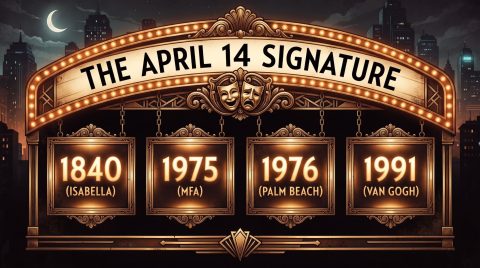
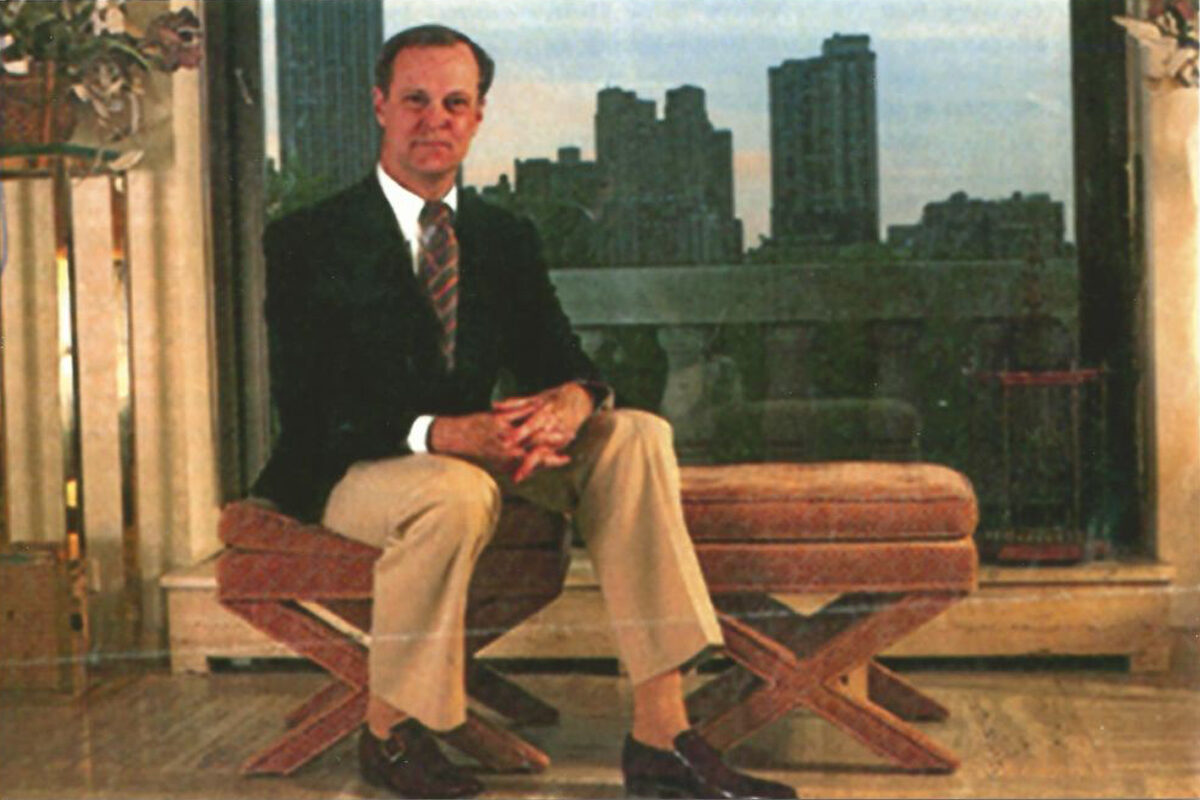
The Unraveling of 1990–1991For decades, the public has been told that the major art crimes of the 1990s were chaotic, disconnected jobs pulled off by independent low-level crews. But when you map the verified record onto a single forensic timeline, it reveals a consecutive chain of events under severe pressure: March 18, 1990: Thirteen irreplaceable masterworks are taken from the Isabella Stewart Gardner Museum in Boston, potentially facilitated by night watchman Rick Abath—a pawn positioned to take the blame while the real architects walked away. December 21, 1990: Mary Robinson Koch passes away in Wichita, Kansas—the matriarch of the dynasty and mother of Frederick R. Koch, whose unearned wealth financed these operations. April 14, 1991: On Isabella Stewart Gardner’s birthday, twenty masterpieces are seized at the Van Gogh Museum in Amsterdam before the operation falls apart. The 4/14 calendar signature strikes again. September 24, 1991: Robert Donati is found murdered in the trunk of his car in Revere, Massachusetts—permanently silencing a central operative with deep ties to the underground art trade. - October 7, 1991 (35 Years Ago Today): The 40,000 sq. ft. James Bourlet & Sons fine art depository in West London burns to the ground, wiping out an estimated £100 million in insured art treasures. While contemporary press reports cited massive losses to Frederick R. Koch’s collections—while claiming his primary paintings were housed elsewhere—physical depository ledgers, storage manifests, and documentation vanished in the flames. Read the 1993 report in The Independent here.
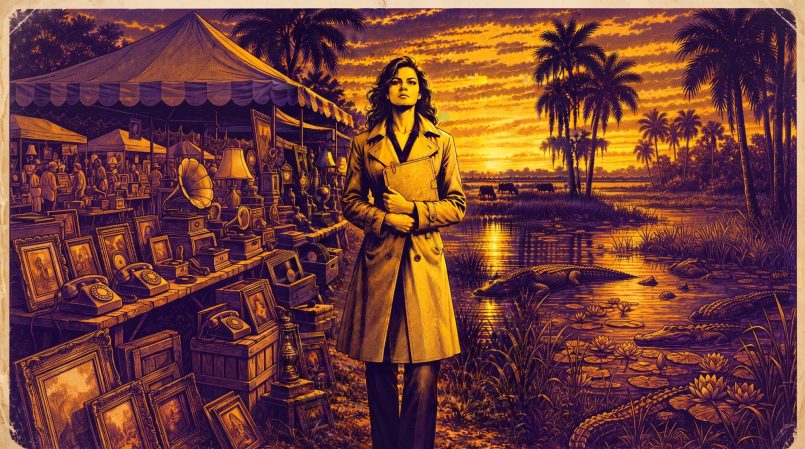
November 1991: Weeks later, an exhausted heir arrives at a flea market booth in in Okeechobee, Florida.
Connecting the Fire to 4/14Robert Donati’s murder has remained a focal point of this investigation. For years, the mainstream narrative pushed the conventional line: an underworld hit tied to a botched heist. The physical timeline shows Donati's death occurring just weeks before the London depository fire. When you examine the operational trail, his fate ties directly back to that April 14 sequence. In our next issue, I will be presenting a detailed analysis of why I think Donati’s death might have been directly triggered by the 4/14 pattern. People often resist new findings not because the data is flawed, but because stepping outside the official script requires effort. It is always easier to dismiss an independent researcher than to confront the gaps in institutional claims. But physical records, dates, and paper trails do not dissolve simply because they are inconvenient to acknowledge.
Pawns, Players, and the Honest WitnessWhen you examine how these pieces fell, three names sit directly at ground level—and they could not be more different in how they were used: Rick Abath: The true pawn. A twenty-three-year-old night watchman who was potentially manipulated, leveraged, and ultimately controlled by forces far larger than himself. He was someone the real architects could use, push around, and easily discard to take the public fall. Robert Donati: Not a pawn. Donati put himself right in the middle of the game. He maneuvered within Boston’s underworld to use stolen masterpieces as personal bargaining chips, thinking he could navigate a high-stakes arena controlled by elite power. - Mary in Okeechobee: The witness who held the line. In the midst of his unraveling crimes and his own breakdown, an exhausted heir arrived at her booth seeking an exit. But the reality of his family dynasty meant their protective machinery would never permit that truth to stand. The gatekeepers assumed she was a nobody who could easily be forgotten, but she kept the handwritten notes, preserved the paper trail, and protected the ledger they tried to bury.
|