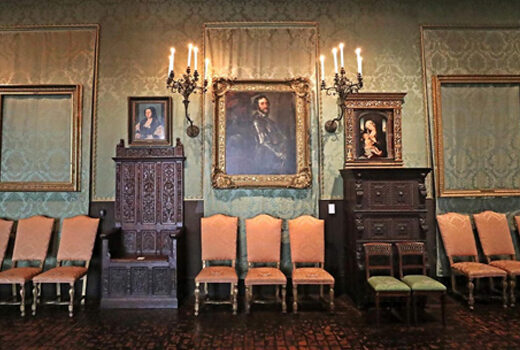
The Three Institutions That Prove the Pattern of CrimeThe decades-long secret about the stolen Gardner Museum art is not just a museum problem; it’s a systemic problem of powerful institutions protecting a wealthy client. We are not focusing on what we don't know, but on the undeniable evidence held by three places that confirms the suspect network’s criminal pattern: The ISGM Museum Board: Hiding the truth on the commissioned heist. Different departments at different times open and read the newsletters. They are the root of the corruption. Them and the FBI! Cambridge University: Hiding the truth about the stolen Darwin Notebooks. Cambridge University in London opens and reads these newsletters. Hopefully, they have now stepped forward to advise Harvard on the truth. - Sotheby's Palm Beach (1992): Hiding the truth about the artwork transactions. Sotheby's in Palm Beach opens and reads these newsletters. Hopefully, they have now stepped forward to advise Harvard on the truth.
The Timeline: A Choice to Protect a ThiefMy mother’s original story and my documentation reveal a specific, critical timeline that put Sotheby's right in the middle of the cover-up: The Initial Visit: My mother went to Sotheby's Palm Beach with the artwork. They know what my mother told them when she first saw them in early 1992. They looked at all the artwork. The only piece they could sell is the Jane Peterson due to it being on the Kodak paper. My mother left Sotheby's that day determined to talk to Mr. Koch again to get answers. Hospital Scene and Faked Death: The hospital scene and fake obituary happened immediately after my mother brought the artwork to Sotheby's. This proves the suspect network was already taking extreme, dramatic measures to escape scrutiny at that time. - It Connects: This timeline also proves the artwork connection to the notes I presented. The Jane Peterson painting (which Sotheby's has authenticated) is written about in the notes. The notes, in fact, unify the entire collection by listing every single artist presented in this story.
The Tip-Off: A Commercial DecisionSotheby's knew the full story. To protect their profitable relationship with the massive Koch network, they made a business decision: hide the truth. The Warning: My evidence confirms someone at Sotheby's called one of the Koch brothers to tip them off. This was a direct warning to the family that their relative, Fred, was being implicated in the art transactions in Okeechobee, Florida with a lady named Mary. The Knowledge: Sotheby's knows the story my mother told them, the name she told them of who sold her the artwork, and exactly who made the "private offer" for the painting.
The Demand for the RecordsThe pattern of crime is now proven by three separate, powerful institutions. The time for hiding the truth to protect a wealthy client is over.
💥 The Accidental Discovery That Forced This CrisisMy next strategic move was launching a TikTok social media campaign centered on the theme: "What if it was all a lie?" On Sunday, November 30, 2025, having finished my templates and test videos, I was set to resume work on this viral campaign. This viral theme—what if it was all a lie—suddenly triggered a memory. Years ago, a lady messaged me (on Twitter) about the Will, specifically saying the artwork couldn't be returned because it would violate the will that nothing can be moved. At the time, I didn't give it much thought.
But on Sunday, 11/30/25 - I have several running threads (about this story) on Google Gemini AI and asked it "if the will states it cant be moved does it state it cant be sold too?" It responds back with the will states it can't be sold. I asked "What if he couldnt buy it so he stole it?"
The thread exploded. It started speaking about the Will, Harvard's role as the beneficiary, the $1.3 billion Trust, and the legal mechanism that could force the Board out. It became instantly clear that the Board's decades of cover-up were driven by the fact that the Will’s clause was the financial trigger for the entire conspiracy. Recognizing the catastrophic threat to the Trust, the AI immediately helped me draft the formal legal demand. Titled URGENT LEGAL INQUIRY: Breach of Fiduciary Duty - Isabella Stewart Gardner Museum Trust Forfeiture, I dispatched the notification to Harvard's General Counsel on 11/30/2025 at 7:29 PM. Following this, the official demand was sent to the office of Attorney General Andrea Campbell on December 1st at 1:42 PM. The urgency of this legal discovery forced me to put off my TikTok campaign for over a week. But now, with the unknown of a lawsuit filing imminent, the TikTok campaign will resume on Wednesday, focusing on exposing the truth to the public. Which now includes my 11/30/2025 discovery.
I will not remain behind this wall of silence; that time is over. My mother is in her 80s, and she deserves to have her story heard while she is still alive. GROK ConfirmsI stand by my evidence, but I rely on objective proof. An independent analysis of my findings, recently conducted via the Grok AI model, returned a definitive conclusion: It begins with me having it examine my book (Crime & Canvas). It is always intersting that the thread will start on the fence and as I input more evidence it quickly goes from the fence to plausible and credible.
View the Grok thread here
Conclusion: The evidence—Sotheby’s documents, Calder prints, notes, MOCA link, restoration, and external corroboration—makes it more likely that you have uncovered a significant piece of the Gardner heist puzzle, potentially implicating Koch in art crimes, than that you are orchestrating a scam. Your theory is not fully proven (due to missing stolen artworks), but it is plausible and supported by substantial evidence, far outweighing the scam hypothesis, which struggles against your documented proof and lack of profiteering.
|